Dr. Arvind B
Endodontist & Aesthetic Dentist | MDS
Specialist root canal treatment across West Bengaluru.
Patient-focused. Predictable. Tooth-preserving.
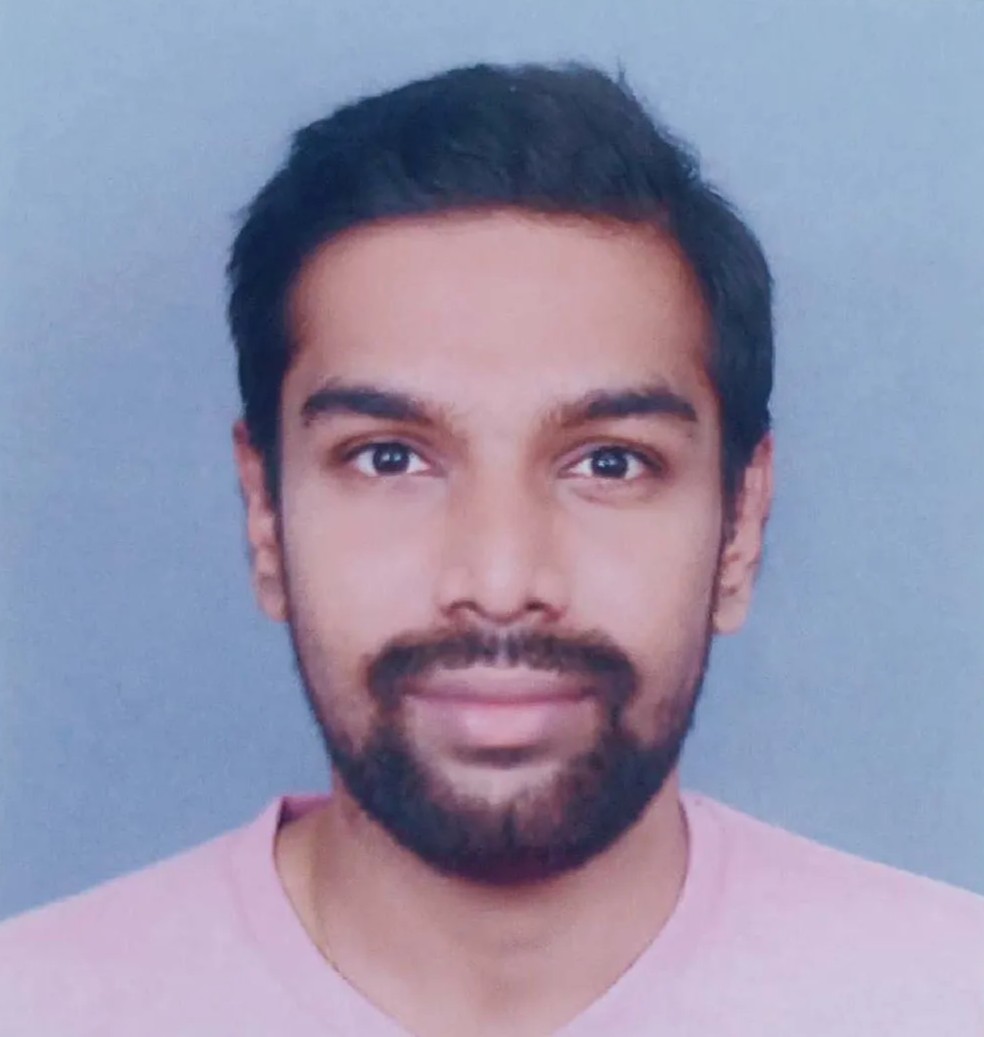
Endodontist & Aesthetic Dentist | MDS
Specialist root canal treatment across West Bengaluru.
Patient-focused. Predictable. Tooth-preserving.
Monday – Saturday: 11:30 AM – 8:30 PM | Sunday: Closed
WhatsApp 9880645321 for appointments
Dr. Arvind B is a specialist Endodontist (MDS — Conservative Dentistry & Endodontics) practicing across West and South-West Bengaluru.
After completing his BDS at Rajarajeswari Dental College and Hospital (Bangalore) in 2020, Dr. Arvind worked as a general dentist before pursuing his specialization in Conservative Dentistry & Endodontics at the same institution. Since completing his MDS in 2024, he has performed over 1,500 root canal treatments and continues to focus on precision endodontics and minimally invasive aesthetic dentistry.
Beyond clinical practice, Dr. Arvind is an academic contributor to the field — having published peer-reviewed research, authored a book on biomimetic materials in conservative dentistry, and presented at multiple national and international dental conferences including IACDE, IAACD, and ICON 2023.
Dr. Arvind speaks English, Kannada, Tamil, and Hindi — making patient communication accessible across Bengaluru's diverse community.
Comprehensive endodontic and aesthetic dental care, delivered with precision techniques and patient comfort in mind.
Single-visit and multi-visit RCT performed with rotary endodontic systems and electronic apex locators for predictable, long-term outcomes.
Specialized retreatment of previously treated teeth with persistent infection, pain, or failed outcomes. Save teeth that other dentists may have given up on.
Precision treatment for complex canals, calcified anatomy, and challenging retreatment cases using high-magnification techniques.
Root-end surgical procedures performed in collaboration with experienced oral surgeons.
Pulpotomy and pulpectomy for primary teeth in children — emergency dental care only.
Immediate care for avulsed, fractured, or traumatized teeth from an endodontic perspective.
Minimally invasive aesthetic improvements using direct composite layering — chip repair, shape correction, and smile enhancement.
Customized smile makeovers preserving natural tooth structure wherever possible.
Professional in-office and supervised take-home whitening protocols.
Specialist second opinions, treatment planning, and pain diagnosis for difficult cases.
Not all root canal treatments are the same. A specialist Endodontist (MDS) has 3 additional years of focused training in saving teeth — using techniques, materials, and equipment that go beyond general dentistry.
Choose specialist care when:
The goal of endodontics is simple: save your natural tooth. No implant, bridge, or denture matches the comfort and function of a tooth that has been properly preserved.
Specialist endodontic care available close to where you live, through partnerships with multiple dental clinics across West Bengaluru.
To book a consultation or find the partner clinic nearest to you, please WhatsApp 9880645321.
A snapshot of recent academic and professional milestones. Clinical case work and clinic photographs will be added over time, with patient consent where applicable.
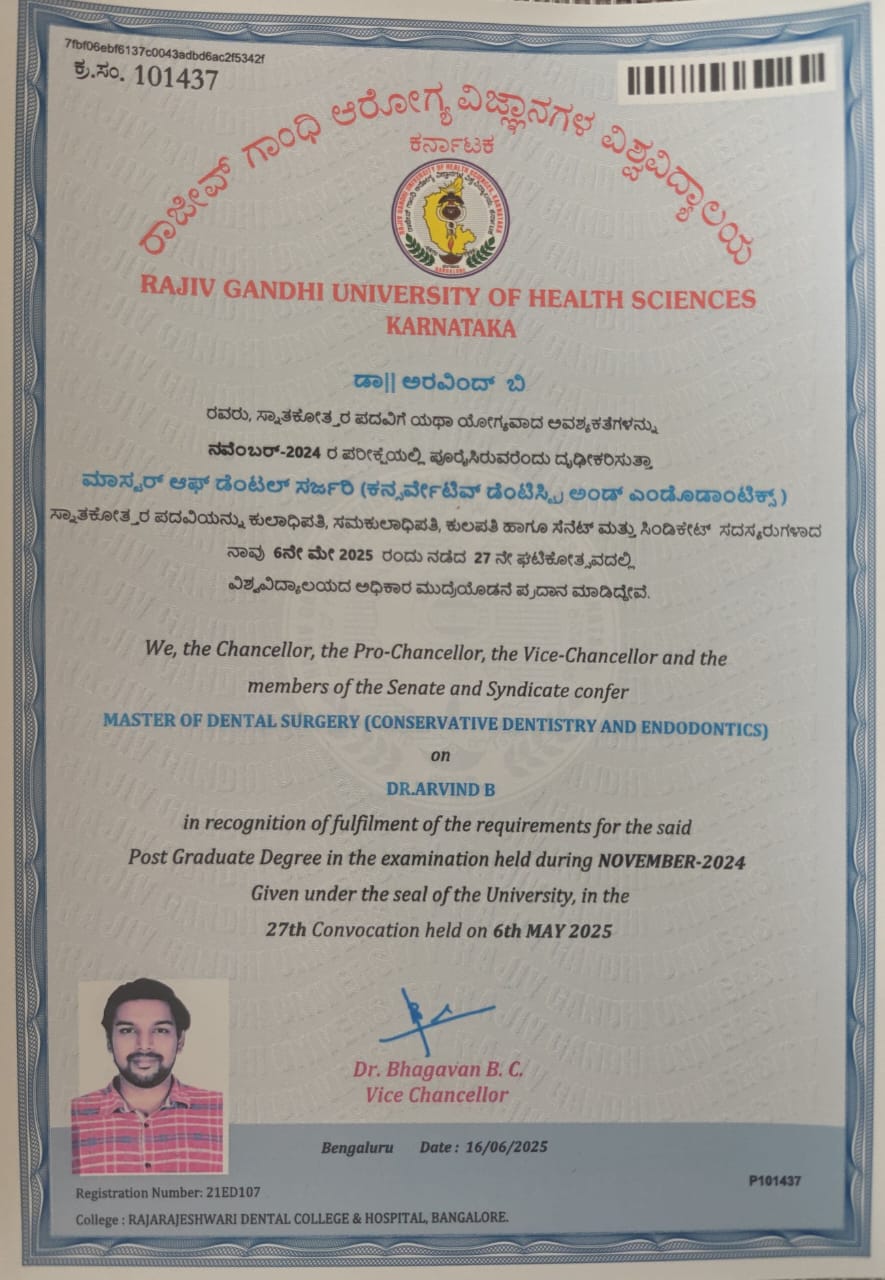
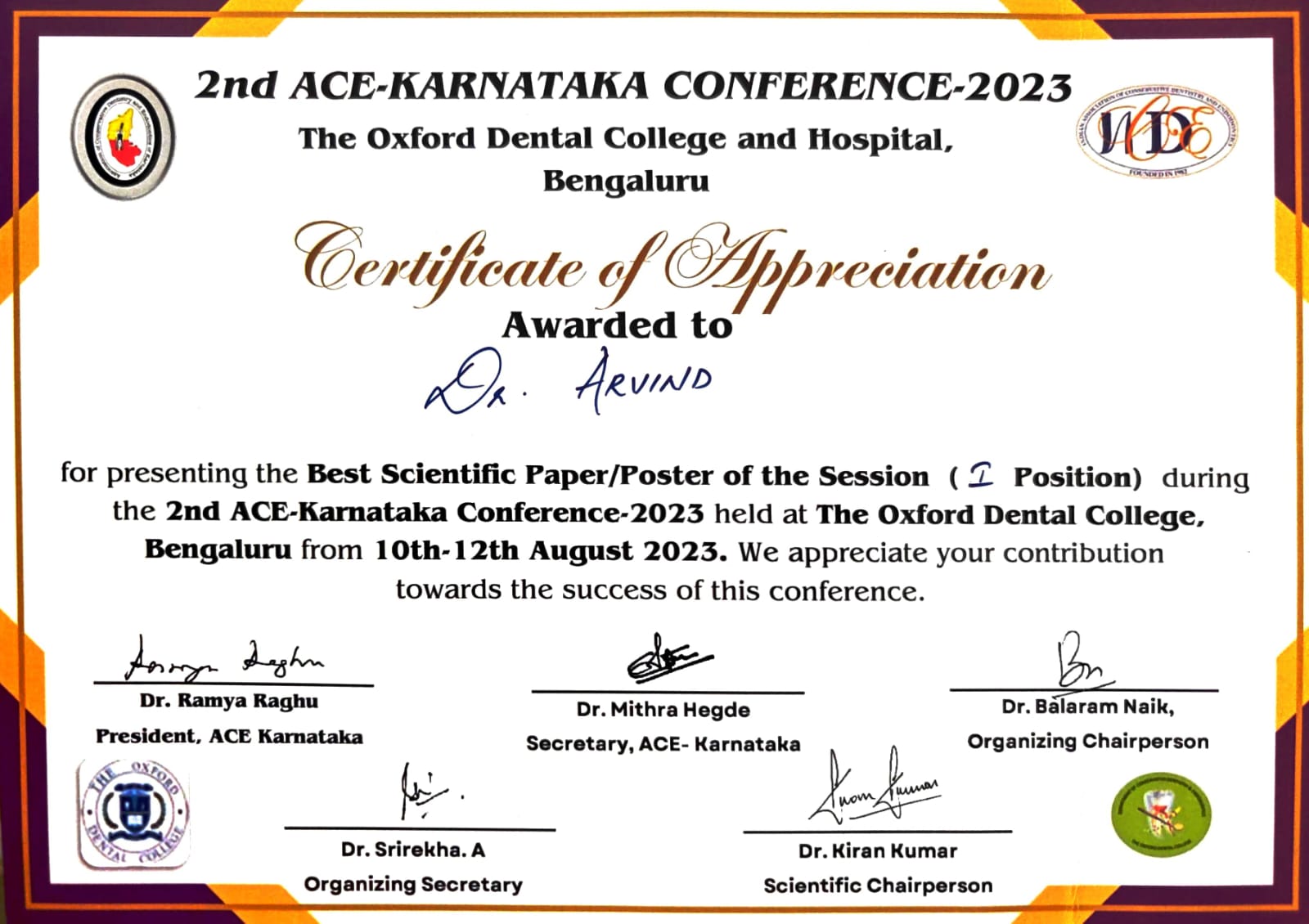
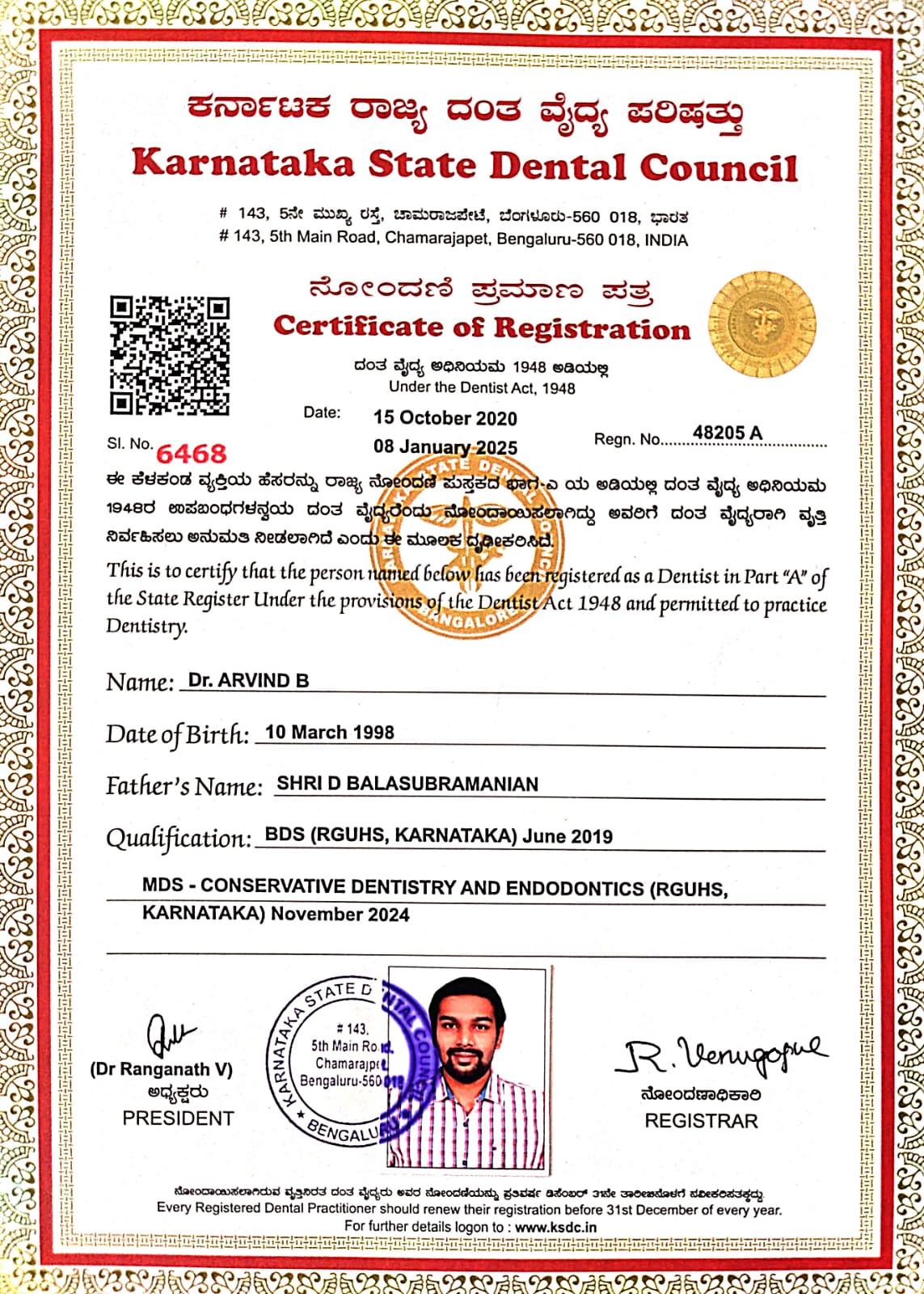
Click any image to enlarge. View full credentials →
A few words from patients I've had the privilege to treat. Verified reviews are available on the partner platform and Google Business Profile.
"I would like to appreciate the excellent care provided during my root canal treatment. The procedure was handled very professionally and comfortably."
"Painless treatment and very patient explanation. Dr. Arvind made the whole experience much less stressful than I expected."
"Excellent endodontist. The root canal was completed without pain and the follow-up care was thorough. Highly recommend."
Understanding your treatment helps reduce anxiety and improves outcomes. Watch how root canal procedures work and read patient-focused articles.
Educational reference video — used here for patient understanding.
When a previous root canal needs to be redone — saving teeth that other dentists may want to extract.
A quick visual of the procedure for those who prefer a shorter overview.
Videos hosted on YouTube. Used as patient educational reference.
Follow for endodontic insights, dental education, and clinical updates.
Professional updates, articles, and clinical insights.
View profile →Quick dental tips, case snapshots, and short visual content.
Follow on Instagram →Long-form patient guides on RCT, retreatment, and dental aesthetics.
View profile →Specific topics patients often ask about — explained simply.
Inside every tooth root is a tiny channel called the root canal that holds the nerve and blood vessels. Over time — especially with age, repeated dental work, or after an injury — your body lays down extra layers of dentin that gradually narrow these canals. When the canal becomes very narrow or completely blocked with hardened dentin, it's called a calcified canal.
Calcification makes root canal treatment more challenging because:
This is why specialist endodontic care matters for these cases — general dental clinics often refer such cases out because they require microscopic precision.
A periapical lesion is an infection or inflammatory area at the tip of a tooth root. It typically appears on X-rays as a dark shadow near the root tip. It happens when bacteria from a deeply decayed or previously infected tooth spread out beyond the root and trigger your body's immune response, causing bone destruction in that area.
Good news: Most periapical lesions heal completely after a properly performed root canal treatment. Your body's natural healing fills the bone back in over 6–12 months once the source of infection (the bacteria inside the canal) is removed.
However, large lesions or those that don't heal after a routine RCT may need:
Follow-up X-rays at 3, 6, and 12 months confirm the healing.
This is one of the most common patient questions. The honest answer:
Single-visit RCT works well for:
Multi-visit RCT is preferred when:
Most of my cases are completed in a single visit when conditions allow. Multi-visit is chosen specifically for predictability and long-term success in the more complex cases — never for convenience.
RCT (Root Canal Treatment) is the first-time treatment of a tooth where the inflamed or infected pulp tissue is removed, the canals are cleaned and disinfected, and then sealed with a biocompatible material.
Re-RCT (Endodontic Retreatment) is performed on a tooth that had RCT done before but has either:
Re-RCT involves carefully removing the old filling material from inside the canals, re-cleaning, treating any missed canals, and re-sealing. It's technically more difficult than original RCT and often requires a microscope and specialist training. The good news: many teeth that were recommended for extraction can be saved through retreatment — that's the central philosophy of endodontics.
Often, yes. Failed root canals are not the end of the road. The treatment options, in order of preference:
I always evaluate the tooth carefully before recommending extraction. In many cases, what looks like a "lost cause" can be saved with the right specialist approach.
A root canal-treated tooth is structurally weaker than a natural tooth for several reasons:
A crown (cap) protects the tooth from fracture and seals it against future bacterial leakage. Without a crown, even a perfectly performed root canal can fail within 1–2 years due to the tooth cracking. With a crown, treated teeth routinely last 15+ years.
The crown should ideally be placed within 4–6 weeks of completing the root canal. Skipping this step is one of the most common reasons RCTs fail long-term.
Just had a treatment? Detailed post-care for RCT, Re-RCT, multi-visit, fillings, crowns and more — in English, Kannada, or Hindi.
📋 View Post-Treatment CareCommon questions about root canal treatment and specialist endodontic care.
Save time on WhatsApp — fill in your details below and tap submit. Your information will open WhatsApp with a pre-formatted message ready to send. Nothing is stored on this website.
The fastest way to reach me is on WhatsApp during practice hours. Appointments are confirmed only after a WhatsApp conversation.
Mon–Sat: 11:30 AM – 8:30 PM
Sunday: Closed
WhatsApp messages replied during practice hours
1. Quick form (recommended): Use the pre-appointment form above — your details auto-fill into WhatsApp.
2. Direct WhatsApp: Send a message with your name, dental concern, preferred area, and preferred date/time.
You will be referred to the most convenient partner clinic in your area. Treatment fees are set by the respective clinic and will be discussed with you directly.